
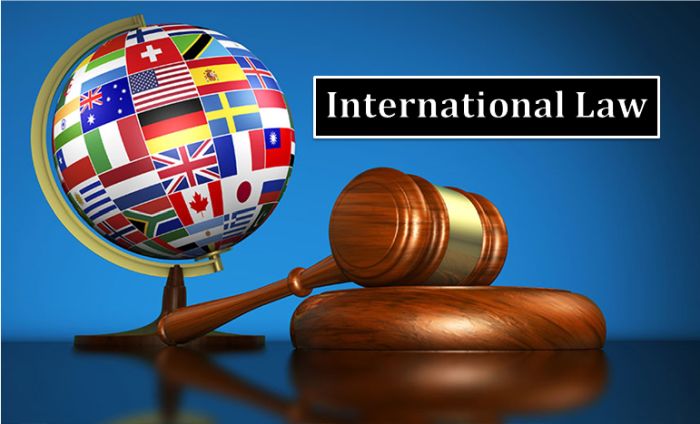
International law refers to a set of rules and principles that govern the relations between countries and international entities. It encompasses agreements, treaties, customary practices, and judicial decisions that guide interactions on a global scale.
International law addresses various aspects, including diplomatic relations, human rights, environmental protection, trade, and armed conflicts. It aims to promote peaceful coexistence, cooperation, and adherence to shared norms within the international community.
Our International Law Undergraduate Program consists of 8 semesters and you must take 3 compulsory courses each semester. You can graduate by taking a total of 24 courses.
International law, also known as public international law, is a complex framework of legal norms and principles that regulate the behavior and interactions of sovereign states and other international entities. It encompasses treaties, customary practices, general principles, and judicial decisions that collectively form a body of rules governing international relations.
At its core, international law aims to establish a stable and predictable environment for states to interact, facilitating cooperation, resolving disputes, and promoting common interests. It covers a wide spectrum of subjects, including human rights, humanitarian law, environmental protection, trade, diplomatic relations, and the peaceful settlement of conflicts.
States willingly enter into agreements through treaties, which are binding under international law, to define their mutual rights, obligations, and responsibilities. Customary international law, developed through consistent state practice and accompanied by a sense of legal obligation (opinio juris), also holds significant weight in shaping international norms.
International law is enforced through diplomatic channels, international organizations, and, in some cases, international courts and tribunals. Institutions like the United Nations and the International Court of Justice play essential roles in upholding and interpreting international legal principles.
The development of international law has been influenced by historical events, technological advancements, and evolving global challenges. While it seeks to maintain peace and order, international law is not always without its limitations, as it relies on state consent and compliance for its effectiveness. Despite challenges, international law remains an essential framework for fostering cooperation and addressing the shared challenges of our interconnected world.
| Time | Place | Room | Date Range | Instructor |
|---|---|---|---|---|
| 00:01 – 24:00 | IL0211 | 102 | 1 January 2023 – 31 December 2023 | PhD |

Our Licence Program in International Law ; started accepting students in 2011 and has been actively and intensively sought after due to its success in rewarding accomplished students over the years.